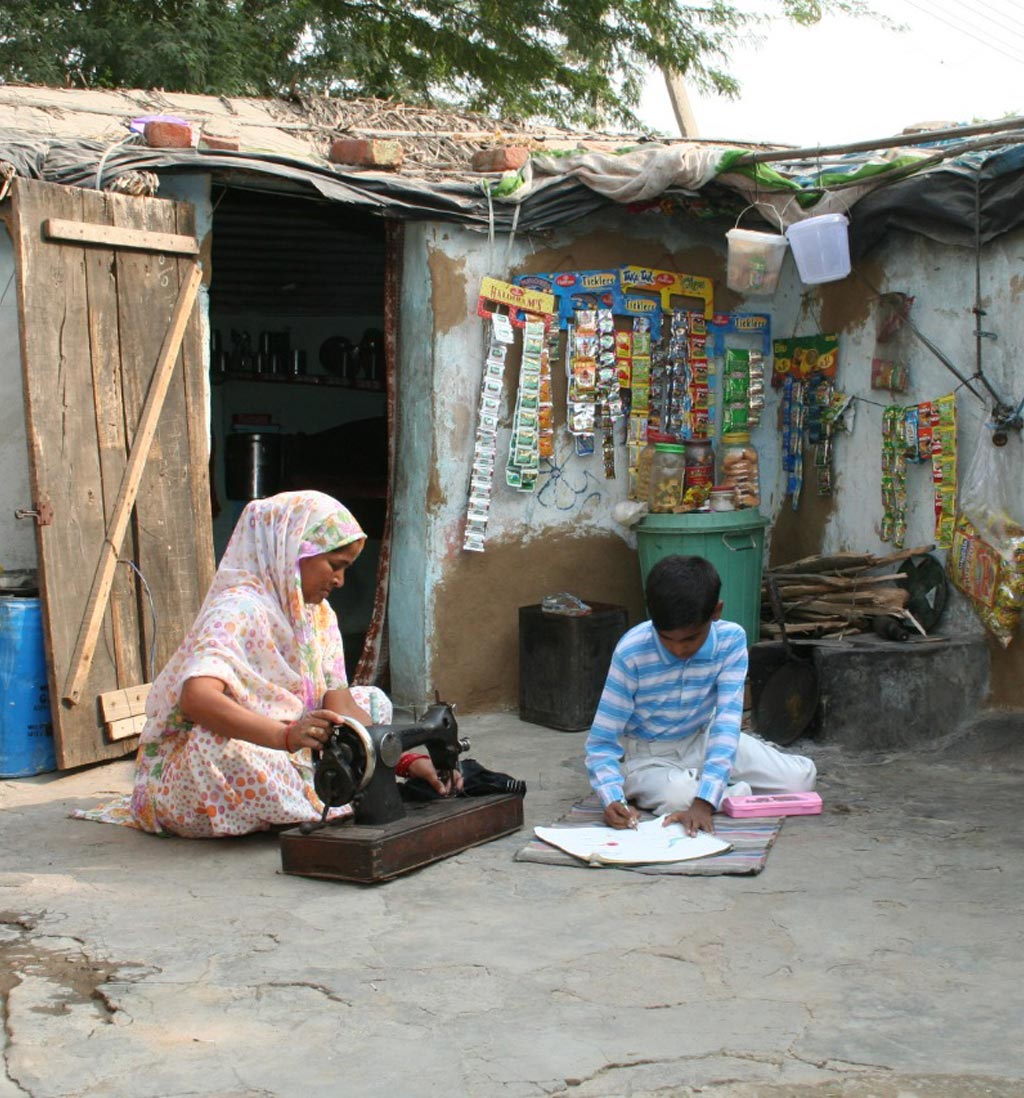
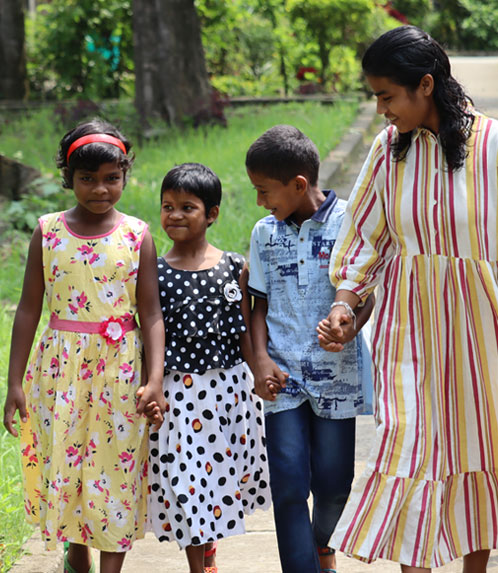
The Family Strengthening Programme (FSP) is a community-based outreach approach, which is focused on empowering vulnerable families and communities so that they can adequately care for their children. Children belonging to vulnerable families and communities are at a risk of being abandoned and, therefore, through the programme, the focus is to prevent children from losing parental care.
We support families/individuals in generating sustainable income, while building their capacity to ensure that children are provided with an environment where they are well cared for and their basic rights to education, skilling, health and nutrition, amongst others, are met.
The programme is designed to provide vulnerable children with essential services
such as health, nutrition and education. Women from disadvantaged families, supported through the programme, are primary caregivers, who are strengthened to be financially independent and self-sustainable through livelihood support extended for promotion of income generation activities. Capacities of primary caregivers are essentially enhanced in the areas of parenting and care, child protection and financial literacy so that they can, in turn, ensure to provide for and contribute actively towards the holistic development of their children. Another integral part of the programme is the Bal Panchayat (Children’s Parliament) model that gives young ones a collective voice through a democratic platform at the grassroots level.
Vocational Training Centre, Chattagram
The Family Strengthening Programme has, till date, reached out to more than 38000 children in rural areas and urban slums in 27 locations, across 22 states/UTs.
Spanning over the period of 3 to 5 years, the programme aims to strengthen families to become self-reliant by ensuring holistic development of their children, building capacities and income generating skills of their caregivers.
Main objectives of the trainings are:
Enhancing individuals’ employability (in wage/self-employment) and ability to adapt to changing.
Technologies and labour markets.
Improving the productivity and profitability of enterprises.
Strengthening national competitiveness and reducing poverty.
Raising self-consciousness and develop human qualities among the trainees.